


Boiler Installations in Ashford
WW Plumbing Services provides professional boiler installations in Ashford for homeowners, landlords and property managers replacing unreliable, outdated or unsuitable heating appliances. Ashford includes established residential neighbourhoods, newer housing developments and properties that have been extended to meet changing household needs. These homes can place very different demands on their boilers and hot water systems.
Get A Free Quote
Boiler Replacement for Growing and Altered Homes
A heating system that suited a property several years ago may no longer provide the comfort or hot water required today. Additional bedrooms, new bathrooms, home offices and open-plan extensions can all change how much work the boiler must complete.
At WW Plumbing Services, we review the current layout and discuss any alterations made since the appliance was installed. We assess how quickly rooms warm, whether hot water remains consistent and whether the existing controls manage the property effectively.
This helps us determine whether a direct replacement will meet current demand or whether the wider arrangement should be updated. The boiler position, flue, condensate drainage and accessible pipework are also inspected before a proposal is prepared.

Choosing Capacity Around Real Household Demand
Boiler output should reflect how the home is occupied rather than being selected from the number of bedrooms alone. A household using several showers and taps within the same morning can have greater hot water demand than a larger property occupied by fewer people.
A combi boiler heats water directly and can offer a convenient arrangement where mains pressure and flow are suitable. It removes the need for a separate hot water cylinder, which can be useful where storage space is limited. However, even a higher-output combi cannot compensate for a restricted incoming water supply.
System boilers work with stored hot water and may better support properties where several outlets are used together. Conventional boilers can remain suitable where tanks, cylinders and established pipework continue to operate effectively.
Our engineers consider occupancy, bathrooms, radiator demand and water performance before explaining the suitable choices. This helps ensure the proposed boiler is neither unnecessarily oversized nor unable to meet everyday requirements.

Retaining or Changing the Existing Hot Water System
Some boiler replacements can be completed while retaining the current hot water cylinder and much of the surrounding equipment. In other properties, changing the boiler type may provide a better arrangement for the available space and household routine.
Removing a cylinder and changing to a combi boiler may release useful storage, but the conversion must be assessed carefully. The incoming water supply needs to support direct hot water production, and households with high simultaneous demand may lose the benefit provided by stored water.
Changing from a combi boiler to a system boiler is also possible where the property has space for a suitable cylinder. This option may be considered after adding bathrooms or where the existing combi struggles during busy periods.
Homeowners comparing conventional heating with another technology can also explore our Ashford renewable heating services. Additional advice about gas appliances and existing heating systems is available from our local gas engineers.
Installation, Controls and System Commissioning
A new boiler should be installed as part of a complete working system. Before fitting the appliance, our engineers assess radiator performance, circulation and the condition of relevant controls. This can identify issues that might otherwise remain after the replacement.
Heating systems containing restricted valves, accumulated debris or poor balancing may require targeted attention. Serviceable radiators and pipework can remain, while repairs or improvements are recommended only where they support dependable operation.
The installation may also include updated temperature and scheduling controls. Depending on the selected boiler and existing equipment, options can include a programmable thermostat, thermostatic radiator valves or compatible smart controls.

Arrange a Boiler Installation Survey in Ashford
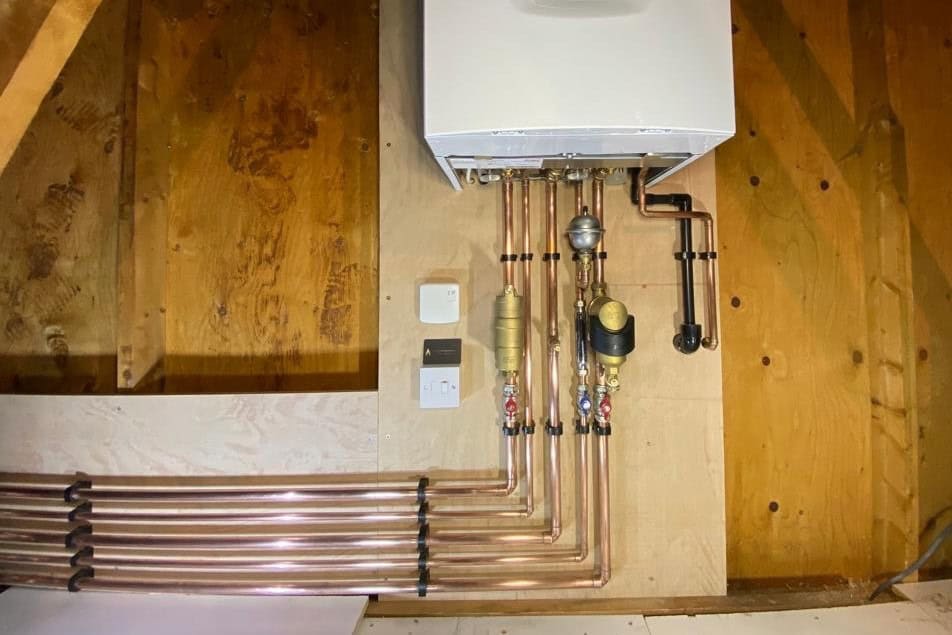
WW Plumbing Services manages boiler installation projects from the first assessment through to removal of the old appliance, fitting of the replacement and final handover. You will receive clear information about the recommended boiler, any related system work and the expected installation timescale before the project begins.
The completed heating system is checked carefully, including radiator operation, hot water performance and control settings. We make sure you understand how to manage the boiler and recognise anything that may require attention.
Customers still considering their options can compare boiler replacement with our Ashford renewable heating services. Further help with gas appliances and heating systems is available through our local gas engineers. Contact our team to arrange a property survey and request a free quotation for your new boiler installation.
Frequently Asked Questions
Find answers to common questions about boiler installations in Ashford, including newer homes, system selection and existing heating equipment.
Boilers in newer properties can still require replacement because of component failure, poor maintenance, unsuitable sizing or changing household requirements. A relatively modern home may also have gained an extension, additional bathroom or altered heating controls since the original appliance was installed. Our engineers inspect the boiler, system layout, radiators, water supply and normal usage before recommending a replacement. Where the current boiler position and connections remain suitable, a direct exchange may be possible with limited disruption. However, any existing fault affecting the wider system should still be identified before the new appliance is fitted. The recommendation is based on the present condition and requirements of the property rather than assuming that a newer building automatically has a suitable heating arrangement.
The better option depends on the household’s water supply, number of bathrooms, available space and likely simultaneous demand. A combi boiler can provide heating and hot water without a separate cylinder, making it suitable for many homes with moderate usage and adequate mains pressure. A system boiler stores hot water and may better support larger households where several taps or showers are used close together. The current heating arrangement should also be considered because changing boiler type can require additional pipework and equipment. Our engineers discuss daily routines and inspect the existing system before explaining which options are practical. This provides a recommendation based on realistic usage rather than automatically choosing the most compact or familiar appliance.
A boiler replacement does not normally require every radiator and section of pipework to be changed. Existing components can remain where they are in suitable condition, correctly sized and capable of distributing heat effectively. Our engineers check whether radiators warm evenly, whether valves operate correctly and whether there are signs of restricted circulation or leakage. Older systems may benefit from cleaning, balancing or selected valve replacement, but this is different from replacing the complete installation. Any necessary work is explained before the project begins and included clearly within the quotation. The aim is to connect the new boiler to a dependable heating system while retaining serviceable equipment and avoiding unnecessary disruption throughout the property.
WW Plumbing Services provides boiler installations throughout Ashford and across Kent. Our dedicated service areas include Ashford, Ramsgate, Faversham, Chartham, Reculver, Herne, Sandwich, Sittingbourne, Herne Bay, Hythe, Sandgate, Dover, Deal, New Romney, Romney Marsh, Lydd, Whitstable, Canterbury, Birchington-on-Sea, Margate and Broadstairs. Properties in nearby communities may also fall within our working area, subject to the postcode and proposed project.