


Boiler Installations in Chartham
WW Plumbing Services provides professional boiler installations in Chartham for homeowners, landlords and property managers replacing boilers that have become unreliable, outdated or unable to meet current household demand. Properties throughout the area include older cottages, established family homes, bungalows and buildings that have been extended or modernised. Each can require a different approach to heating and hot water.
Get A Free Quote
Assessing How the Existing Boiler Serves Your Home
Before recommending a replacement, WW Plumbing Services considers how the current appliance performs across the whole property. A boiler may still operate but provide inconsistent hot water, take longer to heat the rooms or require increasingly frequent repairs.
Our engineers discuss the recent history of the system and inspect the appliance, controls, radiator performance and accessible pipework. We also review the boiler position, flue route, condensate drainage and surrounding connections to identify whether a direct replacement is practical.
Problems such as repeated pressure loss or uneven heating may involve more than the boiler itself. A leaking component, faulty valve or restricted heating circuit can continue causing difficulties after a new appliance is installed unless the underlying issue is addressed.

Planning Hot Water for Families and Changing Occupancy
Household hot water requirements can change over time. Additional occupants, a new bathroom or different daily routines may place more demand on a system that was originally designed for fewer people.
A combi boiler provides hot water directly and can suit homes where the incoming mains supply is strong enough and several outlets are not regularly used together. It can also release space by removing the need for a separate cylinder.
Where showers, baths and taps are likely to operate within the same period, a system boiler with stored hot water may offer a more suitable arrangement. Conventional boilers can also remain practical where established tanks and cylinders continue to serve the property effectively.
Our engineers discuss everyday usage instead of relying only on the number of bedrooms. We assess water pressure, available space and the current hot water equipment before explaining which boiler types provide realistic options for the household.

Boiler Replacement in Cottages and Extended Properties
Older cottages and extended homes can contain heating systems assembled across several stages. Original radiators may operate alongside newer units, while additional rooms may have been connected to pipework that was never reassessed as a complete system.
We inspect how effectively warmth reaches different areas and whether the existing boiler still reflects the current size and layout of the property. Slow-heating extensions, colder end rooms and uneven radiator temperatures may point to circulation or control issues that should be investigated.
Where the boiler is located within a restricted cupboard, kitchen or utility area, we also consider access for installation and future servicing. Retaining the current position often offers the simplest solution, but relocation can be discussed where it would support wider property improvements.
Homeowners reviewing long-term heating options can compare a conventional replacement with our Chartham renewable heating services. Further gas heating advice is available from our local gas engineers.
Improving Heating Control and System Distribution
A new boiler should work with controls and heating components that allow warmth to be distributed effectively. Older programmers, inaccurate thermostats and sticking radiator valves can make it difficult to manage temperatures even when the appliance itself is operating correctly.
Our engineers assess the existing controls and explain whether they can remain or should be updated. Depending on the boiler and property, suitable options may include a programmable room thermostat, thermostatic radiator valves or compatible smart controls.
The condition of the central heating circuit is also reviewed. Debris, trapped air, poor balancing or restricted valves may leave individual radiators underperforming. Where necessary, we recommend cleaning, balancing or selected repairs rather than replacing serviceable equipment without reason.

Arrange a Boiler Installation Survey in Chartham
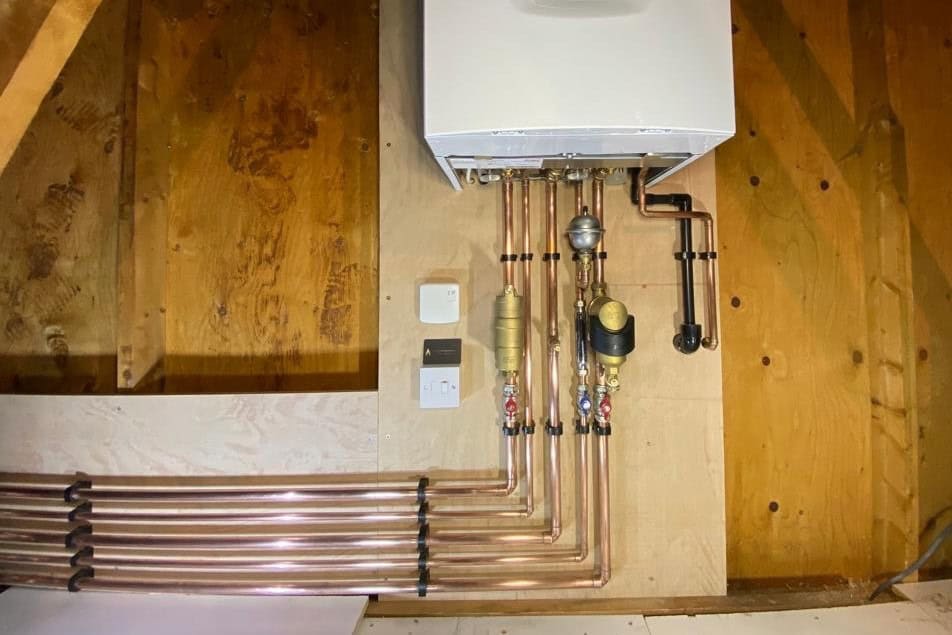
WW Plumbing Services manages boiler replacement projects from the initial assessment through to appliance removal, installation, commissioning and handover. Before work begins, we explain the recommended boiler, any related alterations and the anticipated installation timescale.
The completed system is checked carefully to confirm that heating, hot water and controls operate as intended. We also provide straightforward guidance on everyday use, temperature settings and routine pressure checks.
Customers requiring additional support with gas heating can speak with our qualified Chartham gas engineers. Those considering an alternative system can review our local renewable heating services. Whether your current boiler is failing repeatedly or you are arranging a planned replacement, contact our team to book a survey and request a free quotation.
Frequently Asked Questions
Find answers to common questions about boiler installations in Chartham, including older homes, hot water systems and central heating improvements.
A boiler can be replaced in an older cottage, but the existing heating arrangement should be inspected carefully before new equipment is selected. Traditional properties may contain older pipework, radiators installed at different times and boiler positions that provide limited access. Our engineers assess the appliance, flue, controls, hot water equipment and wider central heating system before preparing a proposal. Where a direct replacement is suitable, much of the existing installation may remain. Where alterations are required, we explain how they support safe access, reliable circulation or improved household comfort. The age of the property does not automatically determine the boiler type. The final recommendation is based on the existing system, water supply, available space and everyday household demand.
An existing hot water cylinder may remain where it is in suitable condition, provides enough capacity and is compatible with the proposed boiler. Retaining stored hot water can be particularly useful where several taps or showers are regularly used within the same period. Our engineers inspect the cylinder, controls and associated pipework before confirming whether it should form part of the new installation. Where the cylinder is ageing, undersized or unsuitable, replacement or a different boiler arrangement can be discussed. Converting to a combi boiler may release space, but it is not automatically the best choice for every household. The incoming mains water supply and normal hot water demand must be assessed before stored water is removed.
A new boiler may improve heating where the existing appliance is faulty or unable to provide sufficient output, but cold rooms can also result from problems elsewhere in the system. Undersized radiators, trapped air, restricted valves, poor balancing and heat loss from the building can all affect comfort. Our engineers assess how the radiators warm and consider whether circulation issues should be addressed during the replacement. Serviceable radiators and pipework can remain, while selected maintenance or upgrades may be recommended where they would make a meaningful difference. Installing a larger boiler without identifying the actual cause may not resolve the problem. The survey helps ensure the proposed work addresses both the appliance and any wider system issues affecting individual rooms.
WW Plumbing Services provides boiler installations throughout Chartham and across Kent. Our dedicated service areas include Ashford, Ramsgate, Faversham, Chartham, Reculver, Herne, Sandwich, Sittingbourne, Herne Bay, Hythe, Sandgate, Dover, Deal, New Romney, Romney Marsh, Lydd, Whitstable, Canterbury, Birchington-on-Sea, Margate and Broadstairs. Properties in nearby communities may also fall within our working area, subject to the postcode and proposed project.